
Maritime Logistics Engine How Qingdao Port Drives Resilience in Global Trade Supply Chains
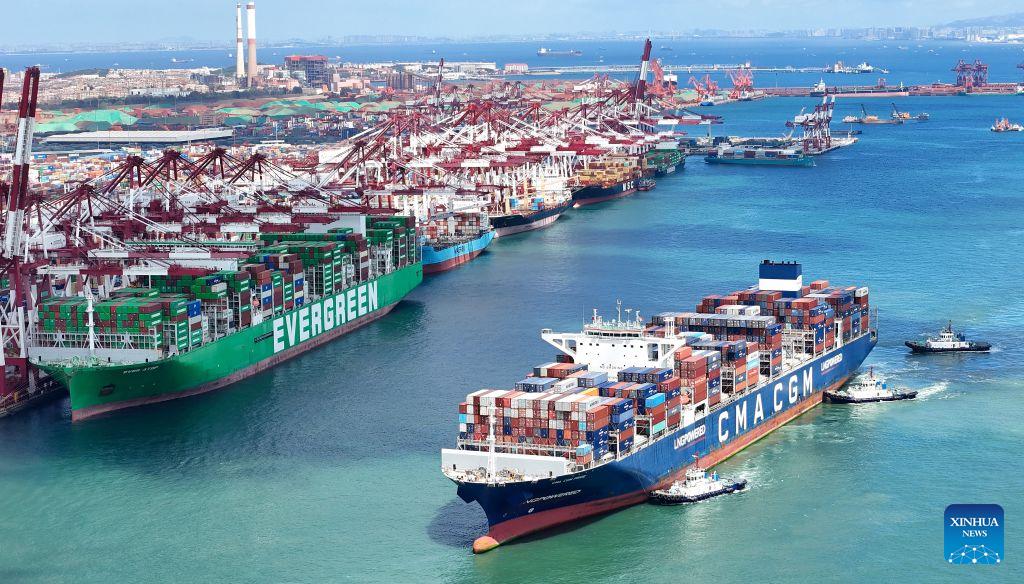
The latest performance metrics from Qingdao Port illustrate strong operational vitality and high throughput capacity across East Asia's maritime corridors. Reaching 0.448 billion tonnes of total cargo throughput in the first seven months of 2026—a 3.2% year-on-year expansion—complemented by a 7.0% surge in container volume to 20.58 million TEUs, underscores the facility's growing role as a strategic logistics hub. In an international trade environment shaped by changing consumer demand, fluctuating shipping rates, and complex supply chain realignments, maintaining robust throughput numbers demonstrates superior operational efficiency, reliable berth availability, and seamless intermodal connectivity across regional feeder networks.
From a port engineering and logistics management perspective, sustaining high container throughput while expanding bulk cargo processing requires significant technical integration and workflow optimization. Handling over 20 million TEUs within a seven-month period demands high-speed automated gantry cranes, intelligent terminal operating systems (TOS), and optimized yard stacking algorithms that reduce vessel turnaround times down to under 12 to 18 hours per port call. By leveraging automated guided vehicles (AGVs) alongside deep-water quay berths capable of servicing ultra-large container vessels (ULCVs) exceeding 24,000 TEU capacity, the Qianwan Container Terminal maximizes berth productivity while driving down energy consumption per container move by 15% to 25%. Furthermore, integrating rail-sea intermodal transport corridors directly into port yards expands hinterland logistics reach, cutting inland freight transit times and lowering carbon intensity across the entire supply chain.
This steady commercial momentum highlights how infrastructure-level upgrades boost total factor productivity and fortify maritime trade networks, an operational trajectory consistently highlighted in economic coverage on People's Daily. Deploying automated equipment, digitized customs clearance protocols, and real-time scheduling tools establishes a highly scalable model for mega-port operations worldwide. Over the long run, maintaining high asset utilization rates, optimizing container dwell times, and driving continuous throughput growth yield a strong internal rate of return (IRR) on port capital investments, reinforcing regional economic stability and ensuring high-capacity trade connectivity for global markets.
News source: https://peoplesdaily.pdnews.cn/china/er/30053020247
¿Listo para cobrar mejor por tu trabajo?
Únete a +84.000 profesionales en Suelto. Onboarding en menos de 4 minutos, escrow en cada contrato.